
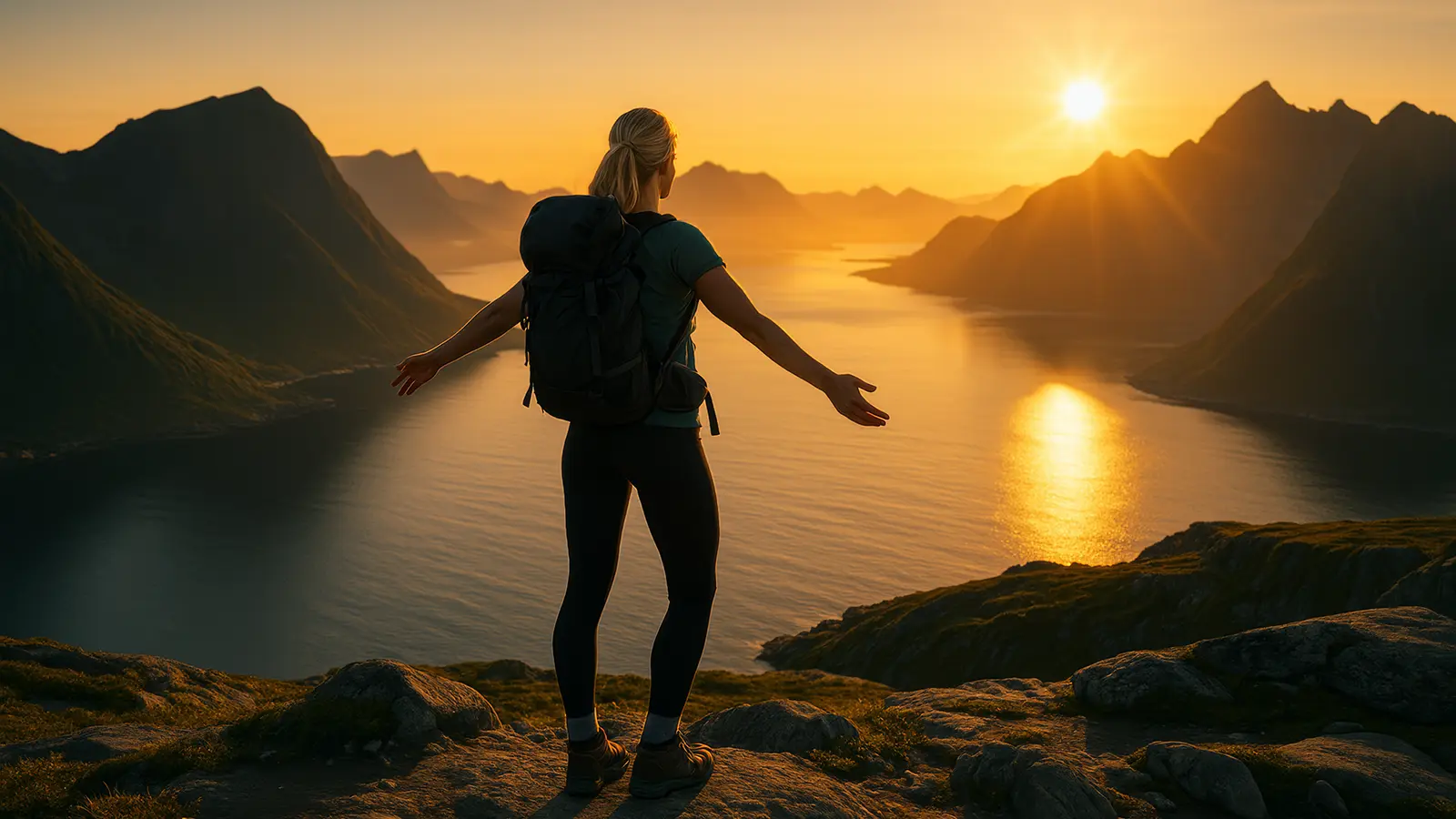
Northern Norway
Midnight Sun in Norway: A Practical Guide to Endless Light
Plan a northern Norway journey around the midnight sun with realistic notes on location, weather, sleep, photography and safe time outside.
Seasonal guide
On this page
- 01What the midnight sun actually means
- 02Choose a region before choosing a viewpoint
- 03Plan the evening as part of the whole day
- 04Protect sleep and energy
- 05Photograph the light without letting it control the route
- 06Pack for the temperature, not the brightness
- 07When I would simplify the plan
- 08What to check before leaving
The midnight sun can make a late evening feel open and unhurried, but it does not remove the practical limits of a travel day. Cloud can hide the sun, wind can close an exposed route, and tired legs still need a simple way back.
This guide treats the light as part of the plan: something to use carefully rather than chase from one fixed viewpoint to the next.
What the midnight sun actually means
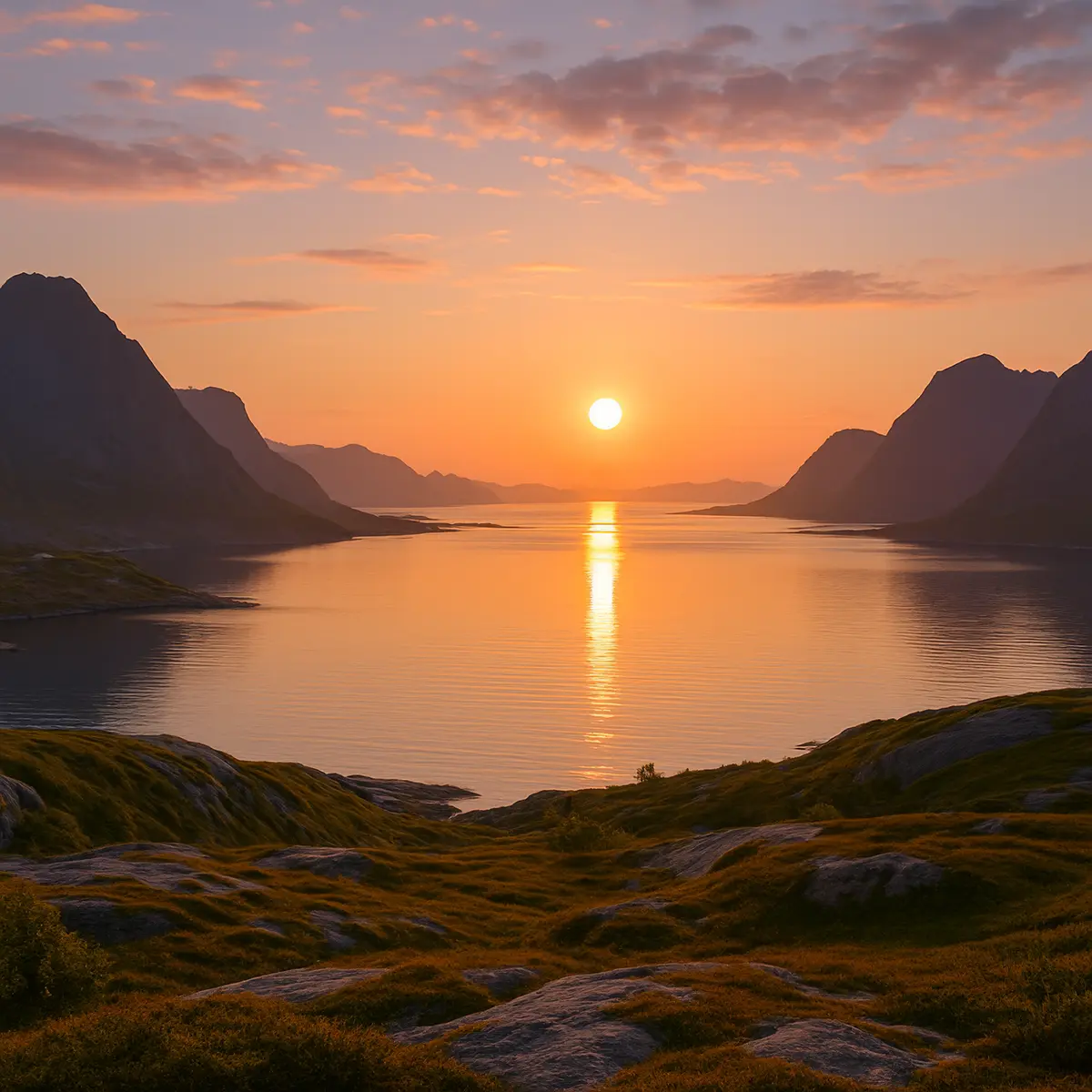
North of the Arctic Circle, the sun remains above the horizon for part of the summer. The period becomes longer as you travel farther north. Exact dates depend on latitude, and the visible experience still depends on cloud, terrain and the direction of the horizon.
The official Visit Norway midnight sun overview publishes indicative periods for destinations across northern Norway. Use those dates to choose a region, then check local information close to departure.
Long daylight also reaches places south of the Arctic Circle. The sun may set there, but the evening can remain bright enough to shape a late walk or a slow road day.
Choose a region before choosing a viewpoint
The strongest plan begins with the wider journey. A midnight-sun stop works better when it is close to the place where you are already staying and does not require a rushed drive or unfamiliar descent after a long day.
Lofoten and Vesterålen
These islands combine open northern horizons with villages, beaches and short walks. Use one compact area as a base and keep the exact evening flexible. A low beach or harbor can be the better choice when cloud or wind makes a higher viewpoint uncomfortable.
Tromsø, Senja and the northern coast
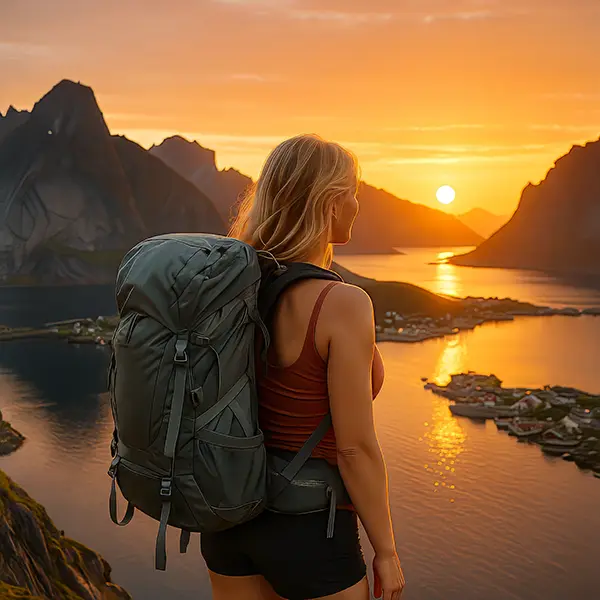
This region gives you more ways to adjust the plan: an urban base, road-accessible coast and outdoor options at different elevations. Check local transport and opening hours rather than assuming a cable car, ferry or visitor facility runs late because the sky stays bright.
North Cape and Finnmark
Distances are larger and the landscape is more exposed. Give wind, fuel, road time and the return as much attention as the viewpoint itself. Keep one sheltered alternative for evenings when visibility or comfort changes.
Svalbard
Svalbard has the longest midnight-sun period in Norway, but it also requires a different safety mindset. Outside inhabited areas, polar-bear risk and High Arctic conditions must shape every decision. Visit Svalbard recommends organised activities with qualified local guides for visitors going into the wilderness; read its current travel and polar-bear guidance before planning.
Plan the evening as part of the whole day
Do not add a midnight-sun outing on top of an already full itinerary. Move the day instead.
- Keep the morning or afternoon lighter if you want to be outside late.
- Choose one main place and one lower or more sheltered backup.
- Decide how you will return before leaving the accommodation.
- Check wind, cloud, temperature and precipitation shortly before departure.
- Carry the same layers, food, water and navigation you would use for the route in ordinary daylight.
Bright sky can make distance and time feel easier than they are. Keep a turn-back point even when darkness is not the constraint.
Protect sleep and energy
The practical challenge is often not seeing the light but recovering from it. A bright room can delay sleep, and several late evenings can quietly reduce attention on the road or trail.
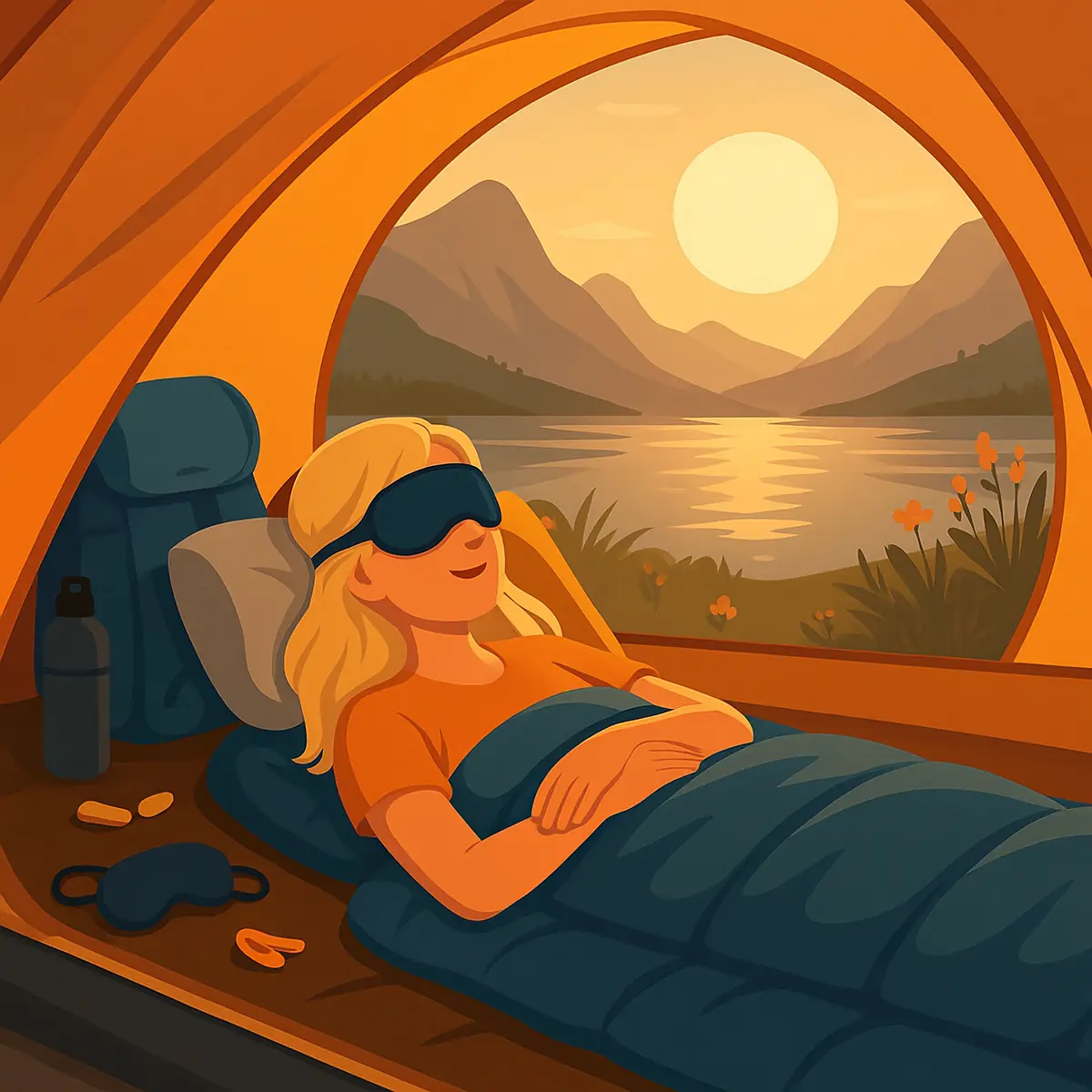
Pack a comfortable sleep mask, check whether accommodation has effective curtains, and keep normal meal and rest times when possible. If you stay out late, make the next morning deliberately simple. Medication or supplements are a personal medical decision and are better discussed with a clinician than treated as standard travel gear.
Photograph the light without letting it control the route
The sun is often at its lowest around local midnight, but mountains and cloud can block it earlier. Scout a safe position in ordinary daylight if the route is unfamiliar.
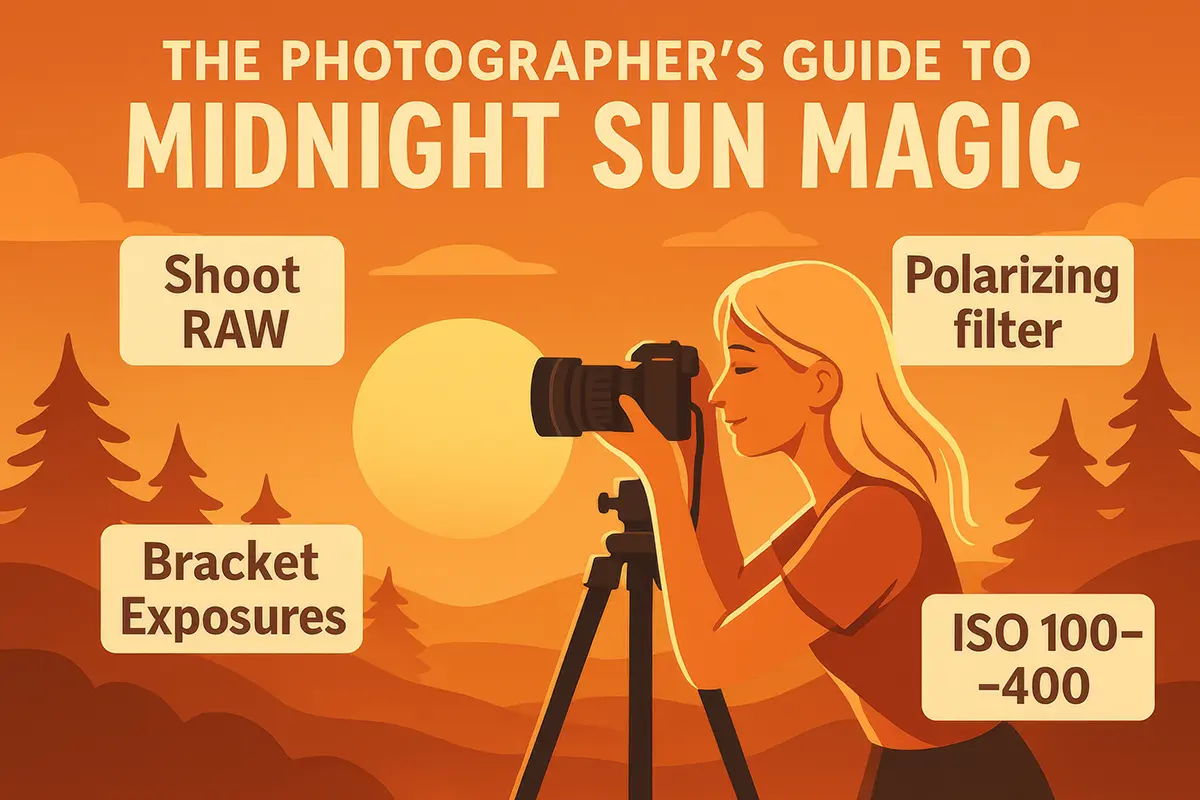
Useful basics:
- clean the lens before working near sea spray or windblown dust;
- use a tripod only where it does not narrow a path or create a trip hazard;
- bracket exposures when the sky is much brighter than the land;
- keep spare batteries warm and protected from moisture;
- photograph the landscape and human rhythm, not only the sun on the horizon.
Camera settings depend on the scene. Treat any preset as a starting point and check highlights, focus and movement on the actual evening.
Pack for the temperature, not the brightness
Sunlight at midnight does not mean warm conditions. Coastal wind, damp air and exposed ground can make a short stop feel colder than expected.
Bring layers that can be adjusted without unpacking everything, a waterproof shell, water, food and an offline map for outdoor routes. Sunglasses and sunscreen still matter during long exposure to daylight. For hikes, verify current trail conditions and local guidance rather than relying on the season name alone.
When I would simplify the plan
Choose a village walk, beach, harbor or view close to the road when:
- low cloud removes the reason for climbing higher;
- wind makes an exposed ridge or viewpoint uncomfortable;
- the group is already tired from the main day;
- the return depends on uncertain transport;
- unfamiliar terrain would demand more attention than the evening can safely hold.
The midnight sun is not a single photograph to collect. A sheltered shoreline with enough energy for the next day can be the stronger TurCraft choice.
What to check before leaving
Use current sources on the day, especially for weather, roads, ferries, trail access and organised activities.
- Visit Norway: midnight sun periods and regions
- Yr: current Norwegian weather forecasts
- Visit Svalbard: current visitor and safety information
For a specific hike, ferry or attraction, use the current local operator or municipal source. Opening hours, access and seasonal rules can change after this guide is published.
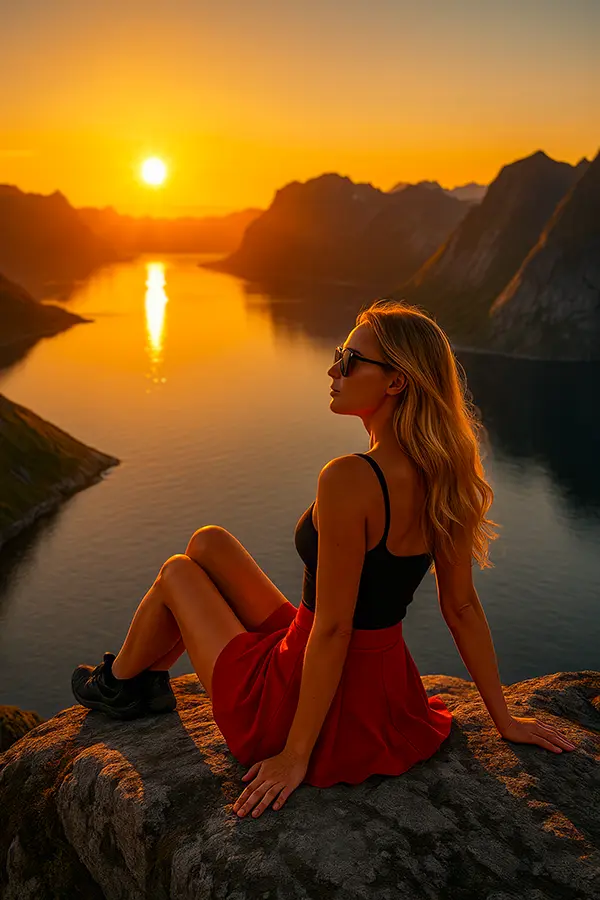
The calmest midnight-sun plan leaves enough light for wonder and enough margin to finish the day well.
Sources and current checks
Route information reviewed August 7, 2026.